- 0489 306 160
- admin@gpstructural.com.au
- Adelaide, South Australia
The consulting engineering firm engaged GP Structural Services to investigate the integrity of the reinforced strip footings and slab at a residential property in Noosa Heads. Concerns were raised about footing reinforcement continuity and overall concrete strength, as the structure was being assessed for suitability under proposed loading upgrades. A detailed non-destructive investigation was required to map reinforcement, measure slab composition, and evaluate compressive strength without destructive coring.
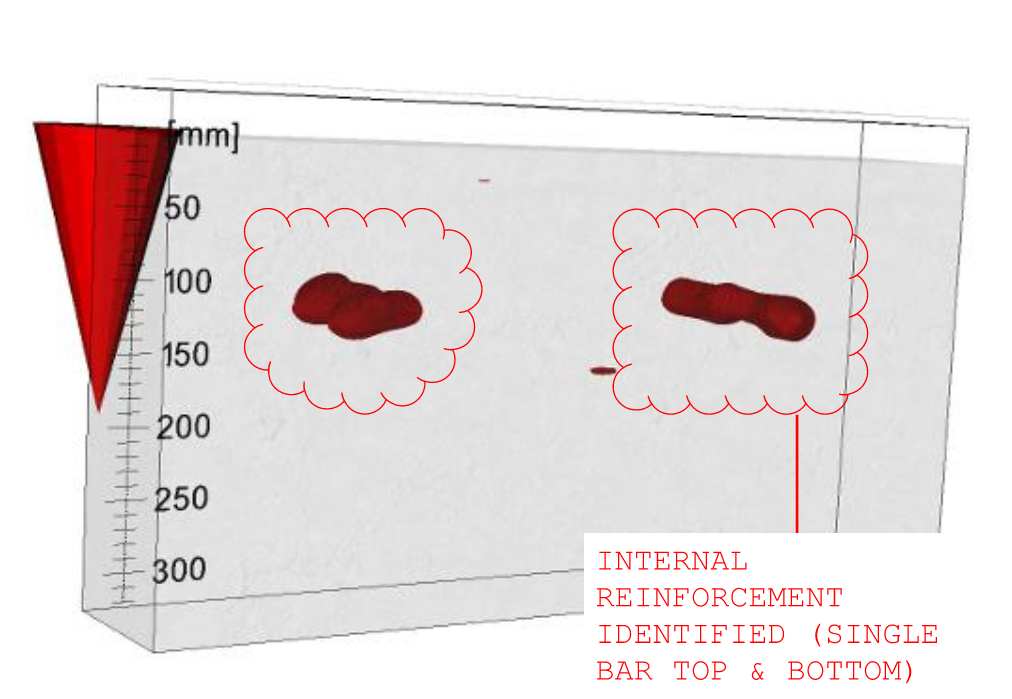
Ground Penetrating Radar (GPR) Scanning was undertaken across semi-exposed strip footings using PS1000 equipment.
Schmidt Hammer Testing was conducted across five locations on the footings.
All results were consolidated into compliance-ready reports, combining structural reinforcement mapping and compressive strength evaluation for engineering review.
By integrating GPR scanning with Schmidt Hammer testing, GP Structural Services provided the client with a comprehensive assessment of both reinforcement detailing and material strength. This dual methodology enabled informed engineering decisions without the delays and costs of destructive coring, ensuring the project could progress with confidence.
In this case, the design engineer was able to confirm the existing footings would not be suitable supporting the integrity under proposed loads.